Setiquette - The TV and Film Set Survival Guide

I went to film school in Chicago at Columbia College, where they throw a Bolex camera in your hands week one and send you across the street to make a movie at Buckingham Fountain.
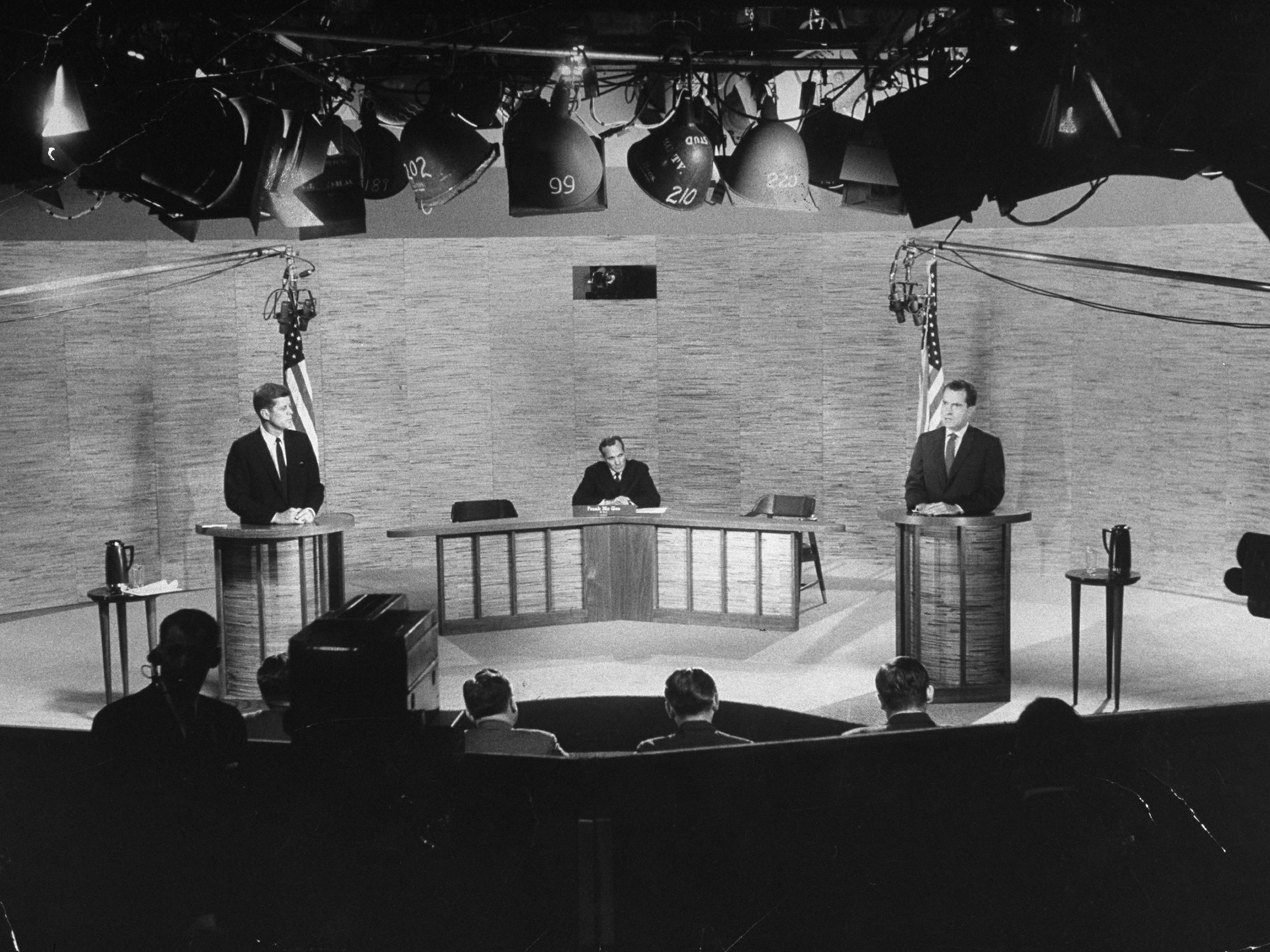
Photograph by Ed Clark, The Life Picture Collection/Getty Images
You learn lighting on the actual rig that was used during the infamous Kennedy/Nixon debate where Nixon sweat his butt off, leading to a cool as a cucumber Kennedy racing ahead of him in the election. Columbia even taught me, a Business Management major with a minor in TV and Film, how to edit my own movie whether splicing actual film stock or using Avid.
I thought I learned everything I needed to know before I moved to Hollywood to start my entertainment career, but I quickly discovered film school left out one of the most important tools of a production — the call sheet.
There may be writers’ room hierarchies or above-the-line and below-the-line prejudices in Hollywood, but the call sheet is the one unifying document in a production. Everyone from the Executive Producer to the Production Assistant uses one and needs to know how to read one. I was jolted into this reality during my first job working at Dustin Hoffman’s company, Punch Productions.
Before I became Dusty’s assistant, I worked as an Office Manager under Punch’s Producer Lee Gottsegen’s watchful eye. Lee was a good-natured guy who saw potential in this podunk Midwestern gal.
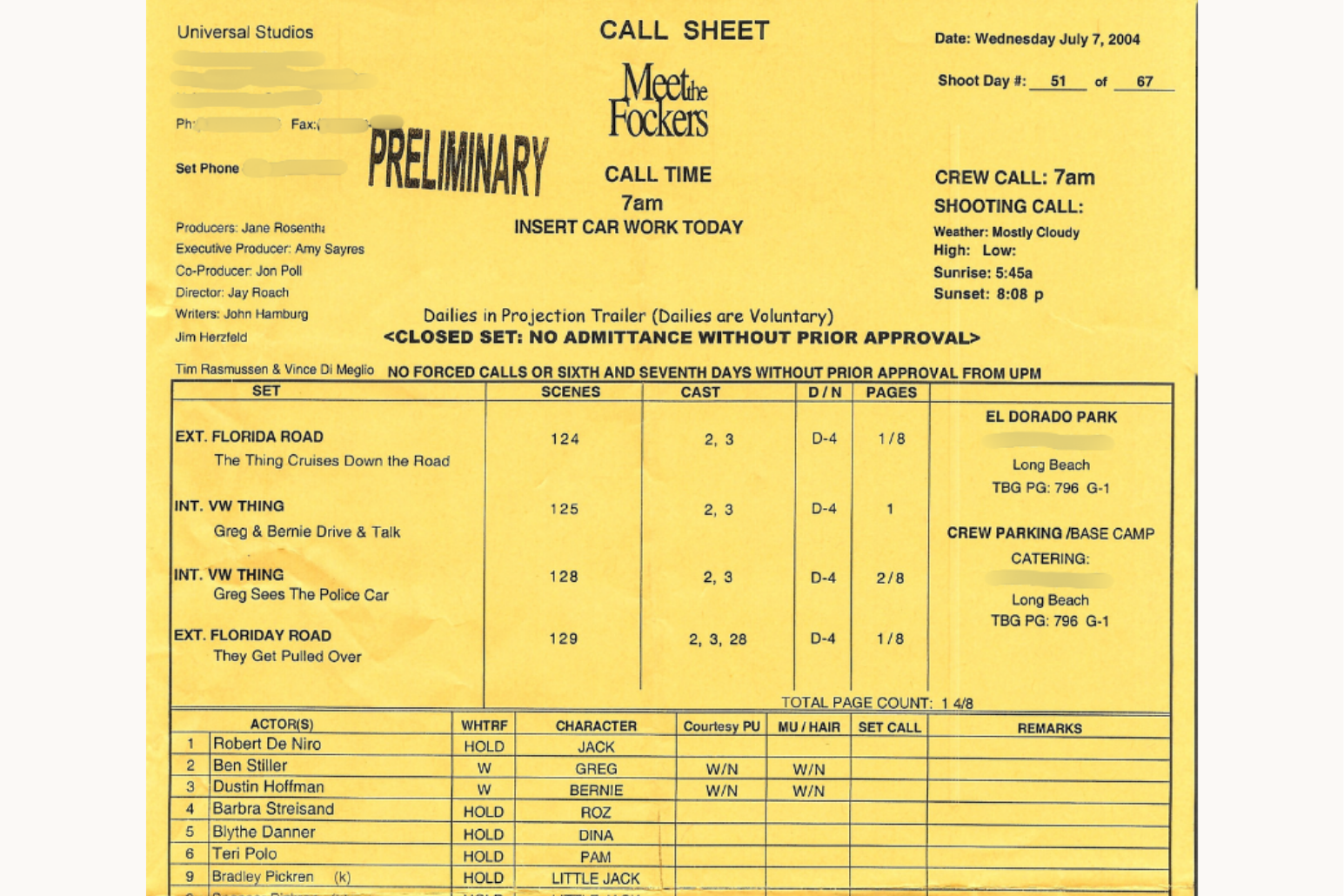
One day he asked me what Dustin was shooting tomorrow, and I blinked at him in response. He raised an eyebrow and suggested I check the call sheet. I fumbled for the double-sided A4 document, but it looked like radio instructions. Sure, it was in English, but there were so many abbreviations and industry lingo on there that I wasn’t quite sure what I was looking at… or where to look.
Lee noticed my panic and gently took the paper out of my hands, pointing at the advanced schedule toward the bottom of the first side. Eureka, there were not only Dustin’s scenes but a plethora of information.
I decided right then and there I would learn the call sheet inside and out. How could I call myself an aspiring producer (I hadn’t thought writing was possible yet) and NOT be able to read the production bible itself? So I did just that.
THE HORROR… THE HORROR
Over the years I was shocked and admittedly sort of relieved to hear I wasn’t alone in this blindspot.
In fact, on many of the shows I’ve worked on, I've witnessed real consequences when people didn't know how to read a call sheet.
There was the fellowship graduate staff writer getting ready to go to set for the first time on a popular TV series. But they had to ask the writers’ assistant how to read the call sheet. Yet again, schools and fellowships failed us.
I was on set for a show and an actor was regaling me and his co-star about his big plans for that night after we wrapped. I applauded him for his stamina, after all, he did have a big scene to shoot the next day…. Horror flooded his face. He had been relying on the ADs, his agent, and others to clue him in on upcoming shoot days. I sensed the same panic in his eyes that I had experienced myself years before and pulled out the call sheet. I pointed out the section he should take note of and after about a ten minute lesson, he was more informed and ready to take the reins of his own career. At first I hadn’t noticed the other crew and cast members who had gathered around to eavesdrop. Even the most experienced crew member raised his brows in surprise.
And then there’s the first-time director who showed up on set promptly at call time only to be met with glares and disdain from the crew. You see, she hadn’t turned over the call sheet to see her specific call time listed… an hour earlier. She hadn’t even said action and already lost the crew for the day. This is what happens when nobody teaches you.
And I’m not blaming anyone for not knowing! I blame the entertainment industry that likes to gatekeep vital information like this. They just hope you know. And if you don’t, it could cost you credibility, jobs, and peace of mind.
Over the years, I mentored up-and-coming writers and shared my production tips and tricks through makeshift emails and cobbled together guides. But every time, I wondered why there wasn’t ONE resource I could just hand them. A guide that breaks all this down so they never have to experience what I, or that staff writer, director, or actor, went through.
So I built one. It’s called Setiquette!
SETIQUETTE
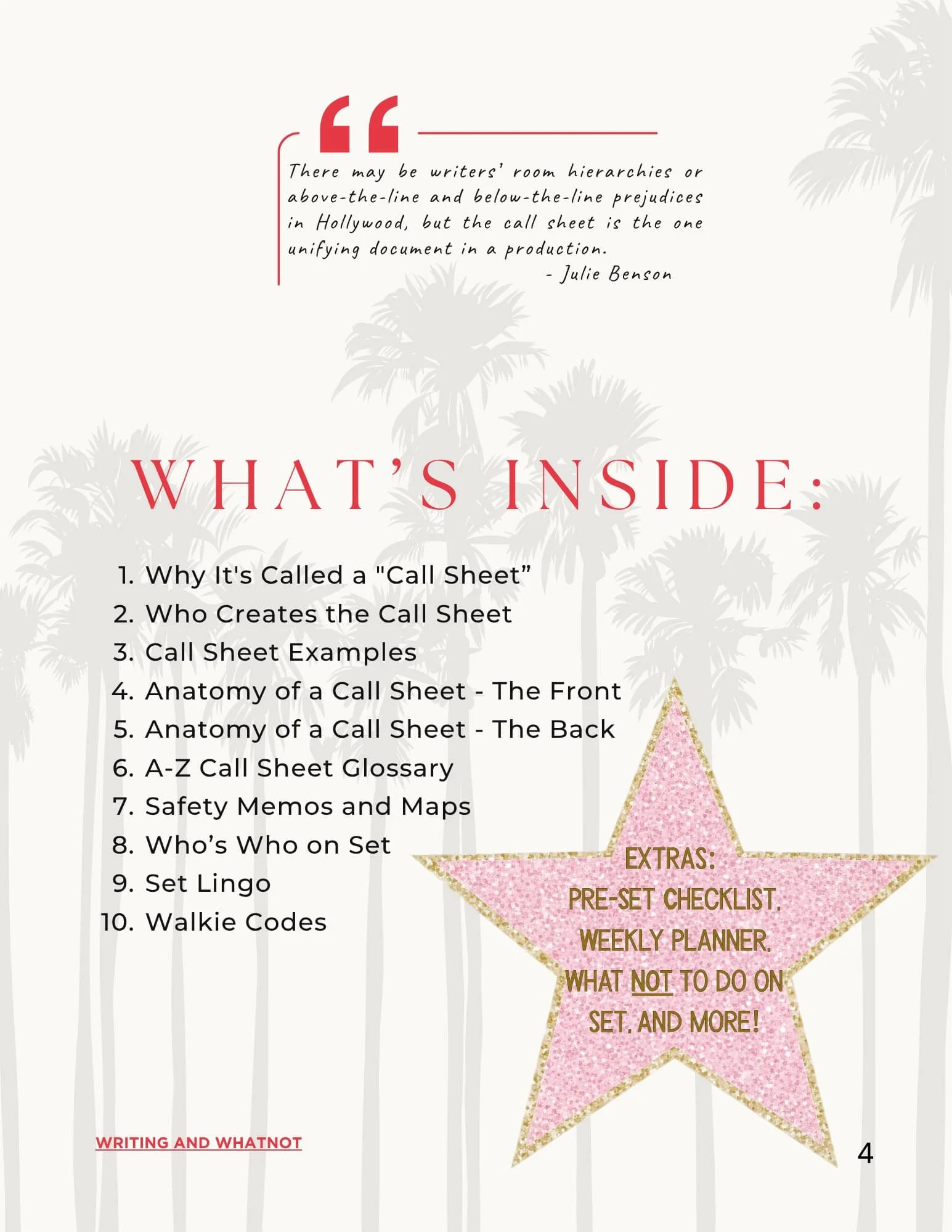
Setiquette is a 58-page goldmine of information in PDF form for $47. It's yours to own forever. You can print it out or store it on your phone for quick reference.
I used real life examples of call sheets from “Meet the Fockers,” “The 100,” and “Wu Assassins.” Not only do I break down each section of the call sheet (front and back), but I cover the complete glossary so you know what all those jargon and abbreviations mean. You'll learn who's who on set, production lingo, walkie codes, and even the NATO phonetic alphabet. There are explanations about safety memos and maps, the filming sequence step by step, and a whole section on what NOT to do on set. Plus Union and Guild resources, a pre-set checklist, and more. This thing took me months to build and fact-check, Whisky Tango Foxtrot was I thinking?!
WHO’S IT FOR?
You. Someone reading my blog who might not want to admit they don’t know and are afraid to look stupid or ask for help. Trust me, you aren’t dumb. There are so many people in this town who just fake it till they make it. Sometimes that works. But why stress yourself out when there is a much easier option out there? Like just KNOWING!
Aspiring Writers
Working Writers
Showrunners
PAs (Production Assistants)
Film, TV, or Commercial Crew
Actors and Actresses
Background Actors and Stand-Ins
Directors
Producers
Development Executives
Personal Assistants/Executive Assistants
Writers’ Assistants
Script Coordinators
Film Students
Content Creators
TV/Film fans who are interested in how the sausage is made
LAUNCH WEEK DEALS
The full 58-page guide is up on the Writing and Whatshop for $47!
I'm over the moon to provide this valuable resource and even more excited to offer a few launch week Setiquette specials.
My beloved newsletter subscribers get $15 off. (Not a subscriber yet? Drop your email in the form below and you'll get the discount code in your welcome email.)
For launch week, everyone else still gets $10 off. At checkout, enter code LAUNCH10. That brings it to $37! After that, Setiquette will be available for the regular price of $47.
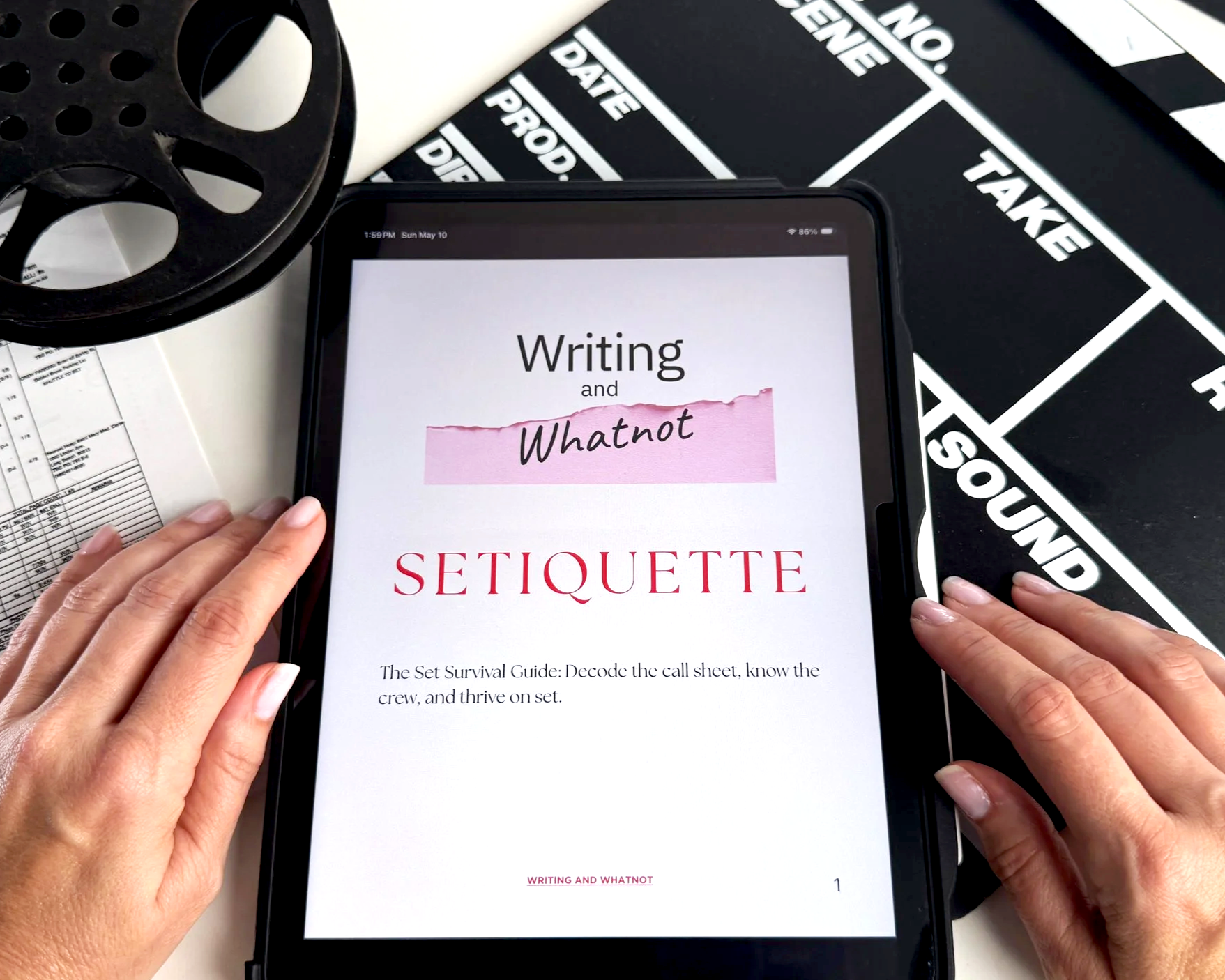
There may be writers' room hierarchies or above-the-line and below-the-line prejudices in Hollywood, but the call sheet is the one unifying document in a production. Everyone expects you to know how to read one but nobody teaches you how. Until now!
Oh hi, my name is Julie Benson and I’ve worked in Hollywood 20+ years and even won an Emmy for my writing! I’ve taken all that working knowledge and compiled it into SETIQUETTE. It's the 58-page guide I wish I'd had when I started out in the entertainment industry.
My first Hollywood lesson came when my boss, a well-known Producer, asked me, "What's shooting today?" He noticed me panicking over the call sheet and kindly pointed out where to look. Here I was, a film school graduate, and nobody had taught me this one vital thing?! I was mortified but grateful for that Producer’s guidance.
In that second, I decided I needed to really learn the call sheet not just for him, but for my own future working in the entertainment industry. I was floored by how much information was on that two-sided piece of paper.
Sadly, or luckily, I wasn't alone in this blindspot. I've seen and heard other horror stories:
A fellowship graduate staff writer who was about to visit set for the first time but had to ask the Writer's Assistant for help reading the call sheet.
A director who showed up to set at crew call, not realizing her actual call time was on the back of the call sheet. Arriving an hour late, she lost the crew's trust (and respect) before she ever said, “Action!”
An actor who was shocked when I mentioned he had scenes to shoot the next day. He was relying on the ADs, and his agents and managers to guide him. You better believe he was prepared from there on out.
Over the years, mentoring up-and-coming writers, I’ve shared production tips and tricks. But I always thought there should be one go-to guide. So I made it.
Inside Setiquette you'll find:
How to read a call sheet (front AND back)
Complete call sheet glossary — what all the jargon and abbreviations mean
Who's who on set — every department explained
Set lingo, walkie codes, and the NATO phonetic alphabet
Explanations about safety memos and maps
The filming sequence, step by step
What NOT to do on set
Union and Guild resources
Pre-set checklist, weekly planner and more!
Who’s it for?
Aspiring Writers
Working Writers
PAs (Production Assistants)
Personal Assistants/Executive Assistants
Actors
Directors
Producers
Film Students
Film/TV fans who are interested in how the TV/movie sausage is made
Setiquette gives you the confidence to walk onto any set in any location and know exactly what's happening around you. A future in the entertainment business is always uncertain, and gatekeeping in Hollywood is the norm. But I believe in helping others and not letting information stop you from succeeding.
Thanks for buying, and I hope to see you soon on set…
-Julie Benson
Instant PDF download. Print it. Save it on your phone. Own it forever.
A future in the entertainment business is always uncertain. But I believe in helping others and not letting a lack of information stop you from succeeding. There's a lot we can't control doing this kind of work, but we can control what we know. It could make all the difference in landing your first gig and continuing a steady career in entertainment.
I'm in the process of making even more guides, including how to be a staff writer in a writers' room, how to script coordinate, and more. Let me know what you'd like to learn more about. Of course, if you don't know, you don't know. That's why I started this blog in the first place and am so glad to be a part of your journey.
I hope to see you on set soon.